
Eliminating Business and Personal Debt as a Christian Founder
The Burden of Borrowed Capital
Borrowing money has become the default mechanism for scaling businesses and funding personal lifestyles in modern commerce. From lines of credit and equipment loans to venture debt and high-interest credit cards, debt is treated as standard leverage for entrepreneurs.
While leverage can accelerate business growth in certain conditions, it also introduces significant fragility. Debt ties up future cash flow, creates immense psychological pressure, and forces founders into decisions driven by desperation rather than conviction.
Scripture gives clear, sober warnings regarding debt. For a Christian business owner seeking true freedom and stability, creating a systematic plan to eliminate both personal and business debt is one of the most strategic moves you can make.
What Scripture Says About Debt
It is important to clarify that the Bible does not explicitly label debt as a sin, but it consistently warns against it and describes it as a form of bondage.
- Proverbs 22:7: “The rich rule over the poor, and the borrower is slave to the lender.”
- Romans 13:8: “Let no debt remain outstanding, except the continuing debt to love one another.”
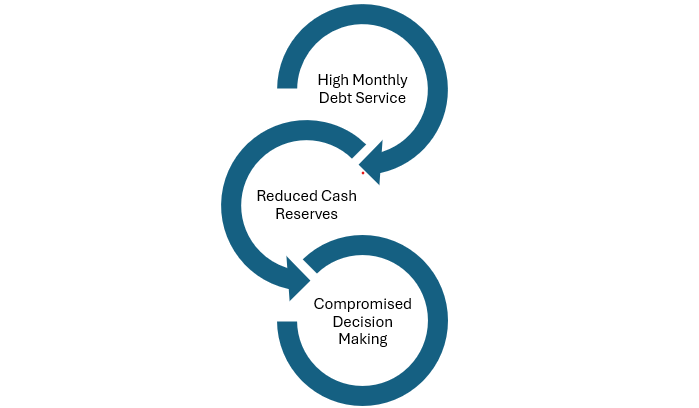
When your company carries heavy debt loads, your lender effectively holds veto power over your operations. If revenues dip, debt payments remain constant, placing your employees, family, and personal peace at risk.
The Strategic Danger of Debt in Business
Beyond the spiritual and emotional weight, debt carries operational risks for entrepreneurs:
- It Constricts Cash Flow: Monthly debt service eats profit margins that could otherwise be reinvested into hiring top talent, marketing, or research and development.
- It Increases Risk During Downturns: A debt-free business can weather market contractions, economic shifts, or lost clients far longer than a highly leveraged competitor.
- It Distorts Risk Tolerance: High debt often forces founders to take shortsighted risks or accept bad-fit clients just to meet upcoming debt obligations.
A 4-Step Debt Elimination Protocol
To transition your business and household toward complete financial freedom, implement this tactical framework:
- Establish an Operational Emergency Fund: Before aggressively paying down debt, retain 3 to 6 months of essential operating expenses in a liquid business account to prevent taking on new debt during unexpected dry spells.
- Conduct a Line-Item Expense Audit: Review every software subscription, vendor contract, and operational overhead item over the last 90 days. Cut non-essential spending and redirect those savings toward debt reduction.
- Use the Debt Snowball or Debt Avalanche Method:
- Debt Snowball: Pay off your smallest debt balance first while paying minimums on the rest to gain momentum.
- Debt Avalanche: Focus extra payments on the loan with the highest interest rate to minimize total interest paid over time.
- Cap Personal Draw and Live Below Your Means: Avoid lifestyle creep as your business grows. Keep your personal household expenses predictable and allocate excess profits toward clearing business debt first, followed by personal real estate or consumer obligations.
Freedom to Obey
True financial freedom is not about buying expensive cars or taking lavish vacations—it is about having the freedom to obey God’s leading without asking a bank for permission. Clear your debts, fortify your balance sheet, and lead your company from a position of strength.